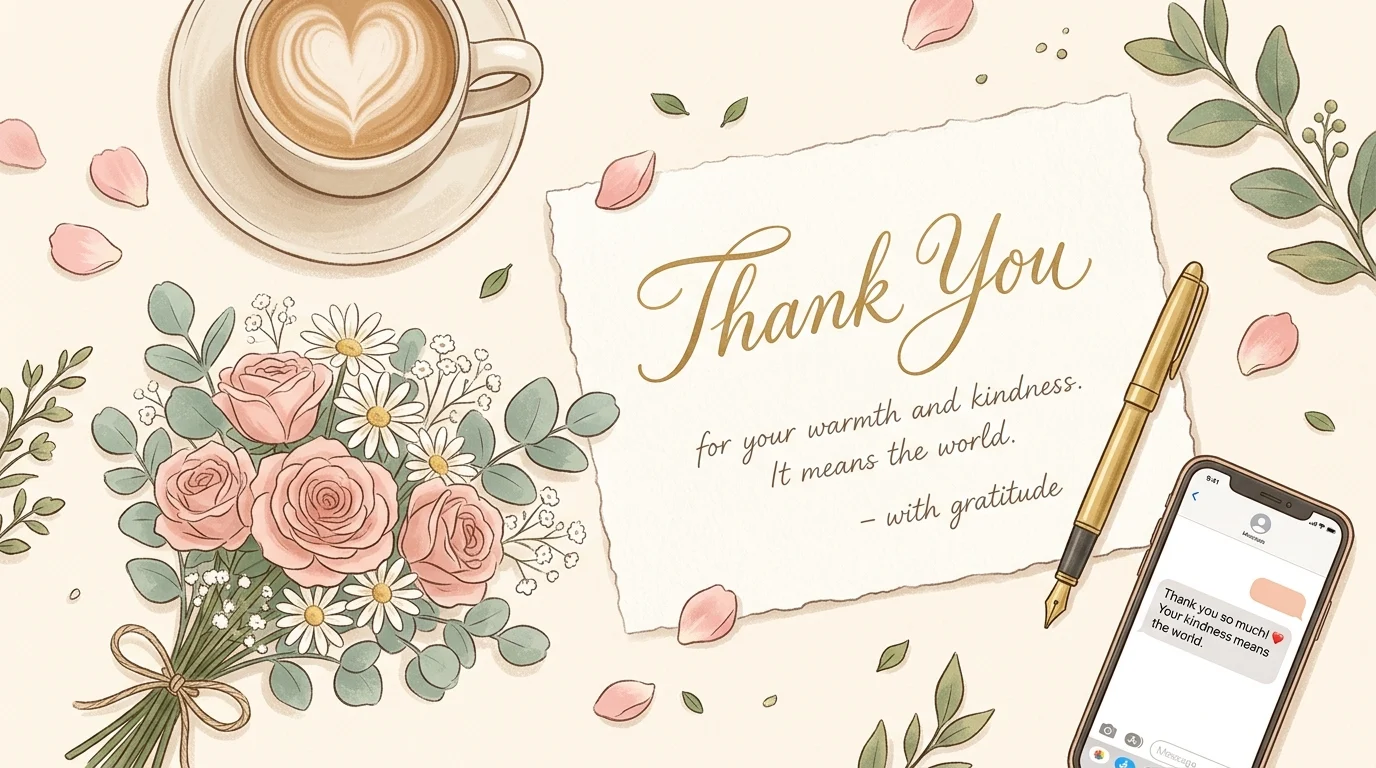
Quick Answer: Instead of saying “thank you,” you can use phrases like “I really appreciate it,” “many thanks,” “I’m so grateful,” “that means a lot to me,” “thanks a million,” or “I owe you one” depending on whether you are writing to a colleague, a friend, or a client.
You just received help from a coworker, a gift from a friend, or a kind gesture from a stranger. The phrase “thank you” sits in your message, but it feels flat. You want something warmer, more sincere, or more fitting for the moment.
The phrase means expressing gratitude and acknowledgment for something someone has done. People use it in emails, texts, cards, speeches, and everyday conversations to show appreciation. It is polite, universal, and widely understood.
Learning alternatives to “thank you” helps you avoid repetition and match your tone to the situation. A message to your boss needs different language than a text to your best friend. This is emotional intelligence in communication, not just vocabulary building.
With years of experience writing thank-you notes, workplace emails, and personal messages, I have seen how small phrase choices change how people feel appreciated. The right words express warmth, sincerity, or enthusiasm. You can choose from formal alternatives and informal expressions in English.
Quick Categories
Formal Alternatives to “Thank You”
- I sincerely appreciate your help
- Many thanks for your time
- I am most grateful for your support
Pro Tip: Use these when writing to senior colleagues, clients, or anyone outside your immediate circle.
Casual Alternatives
- Thanks a ton
- You’re the best
- I owe you one
Pro Tip: Save these for close friends, family, or people you message regularly.
Professional Alternatives
- Thank you for your prompt response
- I appreciate your support on this
- Thanks for taking the time
Pro Tip: These work for team emails, client messages, or professional follow-ups.
Informal Expressions
- Thanks a million
- You’re a lifesaver
- Cheers
Pro Tip: Use informal expressions only in relaxed chats, not in formal business writing.
Common Mistakes
- Incorrect: “Thank you’s!”
Correct: “Thank you!” - Incorrect: “Thank you so much much!”
Correct: “Thank you so much!” - Incorrect: Saying “thanks” in a formal sympathy or condolence message.
Correct: Say “I am deeply grateful for your kindness” instead. - Incorrect: Using “thanks” in a formal apology or serious situation.
Correct: Keep the tone sincere and use “I sincerely appreciate it.” - Incorrect: “Thank you to your help!”
Correct: “Thank you for your help!”
What Does “Thank You” Mean?
It is a polite expression of gratitude for something someone has done, given, or said. Grammatically, “thank” functions as a verb, and “you” is the object, forming a complete expression of appreciation.
Example: “Thank you for helping me with the project. I could not have done it without you.”
When to Use “Thank You”
- In emails after receiving help or information
- In thank-you cards and notes
- In texts after a kind gesture
- In speeches and public acknowledgments
- In everyday conversations
Spoken vs Written: Common in both, especially in written notes, emails, and formal messages.
Formal vs Informal: Generally neutral to formal. Can feel stiff in very casual conversations.
Is It Polite and Professional to Say “Thank You”?
Yes, it is polite. It is also professional in most workplaces. The phrase is respectful, positive, and rarely inappropriate. However, in very casual settings or close friendships, it can feel overly formal or distant.
Politeness means showing warmth and consideration. Professionalism means matching your audience and context.
Business style example: “Thank you for your quick response. I appreciate your support on this project.”
Verdict: Polite? Yes. Professional? Yes, in most workplaces. Use alternatives to match the tone and relationship.
Pros and Cons of Using “Thank You”
Pros:
- Universally understood and polite
- Shows respect and appreciation
- Short and easy to include in messages
- Works across many relationships
Cons:
- Overused and can feel generic
- Can sound distant in close relationships
- May feel too formal in casual chats
- Lacks personal touch without added details
Other Ways to Say “Thank You” (With Examples)
These alternatives will help you sound more sincere, warm, and natural in different situations. Use them according to tone, context, and audience.
Formal Alternatives
- Phrase: I sincerely appreciate your help
Meaning: Deep gratitude for assistance.
Explanation: Formal and respectful; suits professional messages.
Example Sentence: “I sincerely appreciate your help with the report.”
Best Use: Client emails
Worst Use: Casual texts
Tone: Formal, polite, sincere
Context Variability:- Casual: N/A
- Professional: “I sincerely appreciate your help.”
- Spoken: “I sincerely appreciate your help.”
- Phrase: Many thanks for your time
Meaning: Polite gratitude for someone’s effort.
Explanation: Formal-leaning; focuses on time given.
Example Sentence: “Many thanks for your time during the meeting.”
Best Use: Professional emails
Worst Use: Quick chats
Tone: Formal, calm, warm
Context Variability:- Casual: N/A
- Professional: “Many thanks for your time.”
- Spoken: “Many thanks for your time.”
- Phrase: I am most grateful for your support
Meaning: Deep appreciation for help.
Explanation: Appreciative and formal.
Example Sentence: “I am most grateful for your support during this project.”
Best Use: Team emails
Worst Use: Casual messages
Tone: Appreciative, formal, warm
Context Variability:- Casual: N/A
- Professional: “I am most grateful for your support.”
- Spoken: “I am most grateful for your support.”
- Phrase: I would like to express my gratitude
Meaning: Formal way to show thanks.
Explanation: Polite and elaborate.
Example Sentence: “I would like to express my gratitude for your kindness.”
Best Use: Formal letters
Worst Use: Peer humor
Tone: Polite, formal, sincere
Context Variability:- Casual: N/A
- Professional: “I would like to express my gratitude.”
- Spoken: “I would like to express my gratitude.”
Professional Alternatives
- Phrase: Thank you for your prompt response
Meaning: Acknowledge quick reply.
Explanation: Neutral and workplace-friendly.
Example Sentence: “Thank you for your prompt response; it helped us move forward.”
Best Use: Business emails
Worst Use: Social posts
Tone: Professional, friendly, neutral
Context Variability:- Casual: N/A
- Professional: “Thank you for your prompt response.”
- Spoken: “Thank you for your prompt response.”
- Phrase: I appreciate your support on this
Meaning: Acknowledge help on a task.
Explanation: Positive and professional.
Example Sentence: “I appreciate your support on this; it made a big difference.”
Best Use: Team updates
Worst Use: External emails
Tone: Professional, positive, warm
Context Variability:- Casual: “I appreciate your support on this.”
- Professional: “I appreciate your support on this.”
- Spoken: “I appreciate your support on this.”
- Phrase: Thanks for taking the time
Meaning: Acknowledge someone’s effort.
Explanation: Professional and appreciative.
Example Sentence: “Thanks for taking the time to review my proposal.”
Best Use: Manager emails
Worst Use: Casual chats
Tone: Professional, appreciative, warm
Context Variability:- Casual: “Thanks for taking the time.”
- Professional: “Thanks for taking the time.”
- Spoken: “Thanks for taking the time.”
- Phrase: I am grateful for your quick action
Meaning: Acknowledge fast help.
Explanation: Appreciative and professional.
Example Sentence: “I am grateful for your quick action on this matter.”
Best Use: Client emails
Worst Use: Formal reports
Tone: Appreciative, professional, warm
Context Variability:- Casual: N/A
- Professional: “I am grateful for your quick action.”
- Spoken: “I am grateful for your quick action.”
Casual Alternatives
- Phrase: Thanks a ton
Meaning: Big thanks in a casual way.
Explanation: Classic casual phrase.
Example Sentence: “Thanks a ton for covering for me!”
Best Use: Friends, peers
Worst Use: Formal emails
Tone: Casual, warm, friendly
Context Variability:- Casual: “Thanks a ton.”
- Professional: N/A
- Spoken: “Thanks a ton.”
- Phrase: You’re the best
Meaning: Express strong appreciation.
Explanation: Relatable and casual.
Example Sentence: “You’re the best for helping me out.”
Best Use: Team chats
Worst Use: Client emails
Tone: Casual, warm, friendly
Context Variability:- Casual: “You’re the best.”
- Professional: N/A
- Spoken: “You’re the best.”
- Phrase: I owe you one
Meaning: Acknowledge a favor.
Explanation: Fun and appreciative.
Example Sentence: “I owe you one for saving my presentation.”
Best Use: Social messages
Worst Use: Formal reports
Tone: Casual, appreciative, warm
Context Variability:- Casual: “I owe you one.”
- Professional: N/A
- Spoken: “I owe you one.”
- Phrase: Thanks a million
Meaning: Huge thanks.
Explanation: Casual and enthusiastic.
Example Sentence: “Thanks a million for your help today.”
Best Use: Friends
Worst Use: Bosses
Tone: Casual, enthusiastic, warm
Context Variability:- Casual: “Thanks a million.”
- Professional: N/A
- Spoken: “Thanks a million.”
Friendly and Warm Alternatives
- Phrase: I really appreciate it
Meaning: Sincere thanks.
Explanation: Warm and empathetic.
Example Sentence: “I really appreciate it; that meant a lot.”
Best Use: Colleagues
Worst Use: Formal emails
Tone: Warm, sincere, friendly
Context Variability:- Casual: “I really appreciate it.”
- Professional: “I really appreciate it.”
- Spoken: “I really appreciate it.”
- Phrase: That means a lot to me
Meaning: Deep personal gratitude.
Explanation: Supportive and personal.
Example Sentence: “That means a lot to me; thank you for being there.”
Best Use: Close colleagues
Worst Use: Client emails
Tone: Warm, personal, sincere
Context Variability:- Casual: “That means a lot to me.”
- Professional: “That means a lot to me.”
- Spoken: “That means a lot to me.”
- Phrase: I’m so grateful
Meaning: Express strong gratitude.
Explanation: Caring and warm.
Example Sentence: “I’m so grateful for everything you did.”
Best Use: Friends, family
Worst Use: Formal notices
Tone: Warm, sincere, caring
Context Variability:- Casual: “I’m so grateful.”
- Professional: “I’m so grateful for your help.”
- Spoken: “I’m so grateful.”
- Phrase: You have no idea how much this helped
Meaning: Emphasize the impact.
Explanation: Warm and personal.
Example Sentence: “You have no idea how much this helped me.”
Best Use: Close colleagues
Worst Use: Formal emails
Tone: Warm, personal, sincere
Context Variability:- Casual: “You have no idea how much this helped.”
- Professional: N/A
- Spoken: “You have no idea how much this helped.”
Informal and Humorous Alternatives
- Phrase: You’re a lifesaver
Meaning: Thank someone for saving the day.
Explanation: Fun and appreciative.
Example Sentence: “You’re a lifesaver for fixing that last-minute!”
Best Use: Social media
Worst Use: Business emails
Tone: Playful, casual, warm
Context Variability:- Casual: “You’re a lifesaver.”
- Professional: N/A
- Spoken: “You’re a lifesaver.”
- Phrase: Cheers
Meaning: Casual thanks, common in UK.
Explanation: Light and friendly.
Example Sentence: “Cheers for the lift home.”
Best Use: Friends
Worst Use: Formal reports
Tone: Casual, friendly, light
Context Variability:- Casual: “Cheers.”
- Professional: N/A
- Spoken: “Cheers.”
- Phrase: You rock
Meaning: Enthusiastic thanks.
Explanation: Trendy and casual.
Example Sentence: “You rock for helping me move!”
Best Use: Social posts
Worst Use: Corporate emails
Tone: Playful, casual, enthusiastic
Context Variability:- Casual: “You rock.”
- Professional: N/A
- Spoken: “You rock.”
- Phrase: I can’t thank you enough
Meaning: Deep, overflowing gratitude.
Explanation: Warm and emphatic.
Example Sentence: “I can’t thank you enough for your kindness.”
Best Use: Personal messages
Worst Use: Formal reports
Tone: Warm, sincere, emphatic
Context Variability:- Casual: “I can’t thank you enough.”
- Professional: “I can’t thank you enough.”
- Spoken: “I can’t thank you enough.”
- Phrase: You’re a gem
Meaning: Thank someone for being wonderful.
Explanation: Warm and playful.
Example Sentence: “You’re a gem for helping with the event.”
Best Use: Friends
Worst Use: Formal contexts
Tone: Warm, playful, affectionate
Context Variability:- Casual: “You’re a gem.”
- Professional: N/A
- Spoken: “You’re a gem.”
Celebratory Alternatives
- Phrase: A heartfelt thank you
Meaning: Sincere, deep thanks.
Explanation: Warm and celebratory.
Example Sentence: “A heartfelt thank you to everyone who supported us.”
Best Use: Speeches
Worst Use: Casual texts
Tone: Warm, sincere, celebratory
Context Variability:- Casual: N/A
- Professional: “A heartfelt thank you to the team.”
- Spoken: “A heartfelt thank you.”
- Phrase: My deepest gratitude
Meaning: Profound thanks.
Explanation: Formal and emphatic.
Example Sentence: “My deepest gratitude for your generosity.”
Best Use: Formal events
Worst Use: Casual chats
Tone: Formal, sincere, celebratory
Context Variability:- Casual: N/A
- Professional: “My deepest gratitude for your support.”
- Spoken: “My deepest gratitude.”
- Phrase: With sincere thanks
Meaning: Formal closing of gratitude.
Explanation: Warm and professional.
Example Sentence: “With sincere thanks for all your hard work.”
Best Use: Team messages
Worst Use: Social posts
Tone: Warm, professional, sincere
Context Variability:- Casual: N/A
- Professional: “With sincere thanks.”
- Spoken: “With sincere thanks.”
- Phrase: Endless thanks
Meaning: Boundless gratitude.
Explanation: Emphatic and celebratory.
Example Sentence: “Endless thanks to everyone who made this possible.”
Best Use: Award speeches
Worst Use: Formal reports
Tone: Emphatic, warm, celebratory
Context Variability:- Casual: N/A
- Professional: “Endless thanks to the team.”
- Spoken: “Endless thanks.”
Social Media Style Alternatives
- Phrase: Grateful beyond words
Meaning: Deep gratitude, trendy.
Explanation: Fun and emotional.
Example Sentence: “Grateful beyond words for this community.”
Best Use: Social media
Worst Use: Formal emails
Tone: Trendy, emotional, warm
Context Variability:- Casual: “Grateful beyond words.”
- Professional: N/A
- Spoken: “Grateful beyond words.”
- Phrase: Thankful vibes
Meaning: Playful gratitude.
Explanation: Trendy and light.
Example Sentence: “Thankful vibes to everyone who showed up.”
Best Use: Social posts
Worst Use: Professional emails
Tone: Trendy, playful, casual
Context Variability:- Casual: “Thankful vibes.”
- Professional: N/A
- Spoken: “Thankful vibes.”
- Phrase: Big love and thanks
Meaning: Warm thanks with affection.
Explanation: Short and trendy.
Example Sentence: “Big love and thanks to my support system.”
Best Use: Social posts
Worst Use: Client emails- Casual: “Big love and thanks.”
- Professional: N/A
- Spoken: “Big love and thanks.”
- Phrase: Sending gratitude your way
Meaning: Express thanks warmly.
Explanation: Upbeat and motivational.
Example Sentence: “Sending gratitude your way for all your help.”
Best Use: Team posts
Worst Use: Formal reports
Tone: Positive, warm, friendly
Context Variability:- Casual: “Sending gratitude your way.”
- Professional: “Sending gratitude your way.”
- Spoken: “Sending gratitude your way.”
- Phrase: Here’s to you
Meaning: Toast in someone’s honor.
Explanation: Warm and social.
Example Sentence: “Here’s to you for making this happen.”
Best Use: Social messages
Worst Use: Formal emails
Tone: Warm, social, friendly
Context Variability:- Casual: “Here’s to you.”
- Professional: N/A
- Spoken: “Here’s to you.”
Pull Quotes
“Thank you” is polite and safe, but safe can also mean forgettable. A fresh phrase shows you put thought into your gratitude.
Tone matters more than vocabulary. “You rock” to a client sounds careless. “I sincerely appreciate your help” to a close friend sounds stiff.
Professional communication is not about big words. It is about choosing the right words for the right person at the right moment.
Humor works for gratitude only when you know your audience. When in doubt, choose warmth over wit.
Mini Quiz
1. You are emailing a client after a meeting. Which is most appropriate?
a) “You rock”
b) “Many thanks for your time”
c) “Thankful vibes”
2. Your close friend helped you move. What should you say?
a) “I sincerely appreciate your help”
b) “You’re a lifesaver”
c) “I would like to express my gratitude”
3. Which phrase is best for a team chat?
a) “Thanks a ton”
b) “I am most grateful for your support”
c) “My deepest gratitude”
4. You are posting on social media. Which fits best?
a) “Many thanks for your time”
b) “Grateful beyond words”
c) “I would like to express my gratitude”
Answers:
- (b) – Formal and respectful for client communication.
- (b) – Warm and appreciative for a close friend.
- (a) – Casual and friendly for a relaxed team chat.
- (b) – Trendy and emotional for social media.
Comparison Table
| Phrase | Tone | Best Use |
|---|---|---|
| I sincerely appreciate your help | Formal, polite | Client emails |
| Many thanks for your time | Formal, calm | Professional emails |
| I appreciate your support on this | Professional, warm | Team emails |
| Thanks for taking the time | Professional, appreciative | Manager emails |
| Thanks a ton | Casual, warm | Friends, peers |
| You’re the best | Casual, friendly | Team chats |
| I really appreciate it | Warm, sincere | Colleagues |
| You’re a lifesaver | Playful, warm | Social media |
| I can’t thank you enough | Warm, emphatic | Personal messages |
| Grateful beyond words | Trendy, emotional | Social posts |
FAQs
What can I say instead of “thank you”?
You can say “I really appreciate it,” “many thanks,” “I’m so grateful,” “that means a lot to me,” “thanks a million,” or “I owe you one” depending on context.
Is “thank you” professional?
Yes, it is professional in most workplaces. However, for a warmer or more specific tone, “I appreciate your support on this” or “thanks for taking the time” works better.
How do you say thank you professionally in an email?
Use “I sincerely appreciate your help,” “many thanks for your time,” or “I appreciate your support on this.” These sound warm without being too casual.
What does “I owe you one” mean?
“I owe you one” is a casual way to thank someone for a favor, implying you will return the kindness. It is best used with friends or close colleagues.
Is it okay to say “thanks” to my boss?
Yes, it is generally fine in modern workplaces. For a more formal tone, try “I sincerely appreciate your help” or “many thanks for your time.”
Conclusion
Learning alternatives to “thank you” helps you sound fresh, natural, and sincere in English. You can be formal, casual, funny, or warm depending on who reads your message. The right phrase makes your gratitude stand out.
Practice choosing phrases based on tone and context. Try one new expression each time you write a thank-you message and notice how people respond. Small changes build fluency over time.
Which phrase will you use next time? Share this article with a colleague who wants to write better messages.
See Also
- Other Ways to Say “For Example”
- Other Ways to Say “Get Well Soon”
- Other Ways to Say “Happy Friday”

Alexander Whitmore is a passionate writer and editor who specializes in English expressions, vocabulary, and effective communication. He helps readers discover clearer, more natural, and professional ways to express their thoughts.