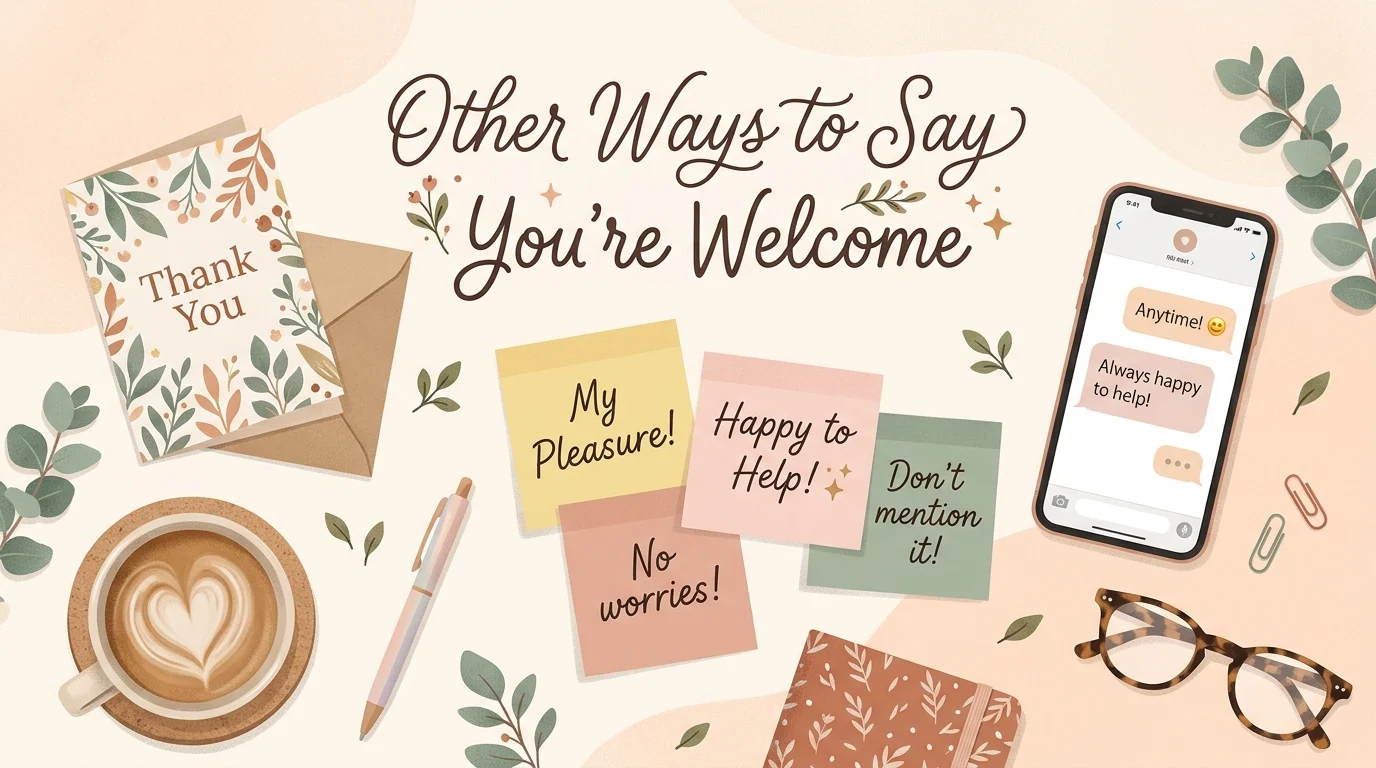
Quick Answer: Instead of saying “you’re welcome,” you can use phrases like “my pleasure,” “happy to help,” “anytime,” “no problem,” “of course,” or “don’t mention it” depending on whether you are replying to a colleague, a friend, a client, or a stranger.
Someone just thanked you, and the phrase “you’re welcome” sits in your reply box. It feels flat, automatic, and a little stiff. You want something warmer, more natural, or more professional that still sounds gracious and appropriate.
The phrase means acknowledging someone’s thanks and expressing that you were glad to help. People use it in emails, chats, texts, and face-to-face conversations to close the loop politely. It is courteous, safe, and widely understood.
Learning alternatives to “you’re welcome” helps you avoid repetition and match your tone to the relationship. A reply to your boss needs different language than one to your best friend. This is social intelligence in communication, not just vocabulary building.
With years of experience writing workplace emails, customer service replies, and casual messages, I have seen how small phrase choices change how people feel appreciated. The right words express warmth, humility, or confidence. You can choose from formal alternatives and informal expressions in English.
Quick Categories
Formal Alternatives to “You’re Welcome”
- My pleasure
- It was my pleasure
- I am glad I could assist
Pro Tip: Use these when replying to clients, senior colleagues, or anyone outside your immediate circle.
Casual Alternatives
- No problem
- Anytime
- No worries
Pro Tip: Save these for friends, close coworkers, or people you message regularly.
Professional Alternatives
- Happy to help
- Glad to be of assistance
- Please let me know if you need anything else
Pro Tip: These work for team emails, customer support, or client messages.
Informal Expressions
- You got it
- Sure thing
- No biggie
Pro Tip: Use informal expressions only in relaxed chats, not in formal business writing.
Common Mistakes
- Incorrect: “You’re welcome’s!”
Correct: “You’re welcome!” - Incorrect: “You’re welcome day!”
Correct: “You’re welcome!” - Incorrect: Saying “no problem” to a customer complaint.
Correct: Say “My pleasure” or “Happy to help” instead. - Incorrect: Using “you’re welcome” before someone thanks you.
Correct: Wait for the thank-you, then respond. - Incorrect: “You’re welcome for your thanks!”
Correct: “You’re welcome! Glad I could help.”
What Does “You’re Welcome” Mean?
It is a polite response to an expression of thanks, acknowledging that you were happy to help or that the favour was no trouble. Grammatically, it is a contraction of “you are welcome,” used as a standalone courtesy phrase.
Example: “Thanks for the ride!” “You’re welcome! It was on my way.”
When to Use “You’re Welcome”
- In replies to thank-you emails
- In customer service responses
- In texts after someone thanks you
- In face-to-face conversations
- In social media comments thanking you publicly
Spoken vs Written: Common in both, especially in written replies and spoken exchanges.
Formal vs Informal: Generally neutral. Can feel stiff or old-fashioned in very casual settings.
Is It Polite and Professional to Say “You’re Welcome”?
Yes, it is polite. It is also professional in most contexts. The phrase is courteous, clear, and rarely inappropriate. However, in very casual settings, it can feel formal or distant, and in some customer service situations, it can sound scripted.
Politeness means showing warmth and consideration. Professionalism means matching your workplace culture and the relationship.
Business style example: “You’re welcome! Please reach out if you need anything else.”
Verdict: Polite? Yes. Professional? Yes, in most contexts. Use alternatives to sound warmer or more natural.
Pros and Cons of Using “You’re Welcome”
Pros:
- Universally understood and polite
- Clearly acknowledges thanks
- Short and easy to include in messages
- Works across many relationships
Cons:
- Overused and can feel scripted
- Can sound stiff or distant in casual settings
- May feel old-fashioned to younger audiences
- Lacks warmth without added details
Other Ways to Say “You’re Welcome” (With Examples)
These alternatives will help you sound more natural, warm, and confident in different situations. Use them according to tone, context, and audience.
Formal Alternatives
- Phrase: My pleasure
Meaning: It was a joy to help you.
Explanation: Formal and gracious; suits professional emails.
Example Sentence: “Thank you for your help.” “My pleasure, always happy to assist.”
Best Use: Client emails
Worst Use: Casual texts
Tone: Formal, gracious, warm
Context Variability:- Casual: N/A
- Professional: “My pleasure. Let me know if anything else comes up.”
- Spoken: “My pleasure.”
- Phrase: It was my pleasure
Meaning: Emphasize that helping was enjoyable.
Explanation: Formal-leaning; adds warmth.
Example Sentence: “It was my pleasure to support the team on this project.”
Best Use: Professional emails
Worst Use: Quick chats
Tone: Formal, warm, sincere
Context Variability:- Casual: N/A
- Professional: “It was my pleasure working with you.”
- Spoken: “It was my pleasure.”
- Phrase: I am glad I could assist
Meaning: Express satisfaction at being useful.
Explanation: Formal and service-oriented.
Example Sentence: “I am glad I could assist with your request.”
Best Use: Customer support
Worst Use: Casual messages
Tone: Formal, helpful, professional
Context Variability:- Casual: N/A
- Professional: “I am glad I could assist you today.”
- Spoken: “I am glad I could assist.”
- Phrase: It was no trouble at all
Meaning: Reassure that helping was easy.
Explanation: Polite and modest.
Example Sentence: “It was no trouble at all; I was heading that way anyway.”
Best Use: Professional relationships
Worst Use: Peer humor
Tone: Polite, modest, warm
Context Variability:- Casual: “It was no trouble at all.”
- Professional: “It was no trouble at all.”
- Spoken: “It was no trouble at all.”
Professional Alternatives
- Phrase: Happy to help
Meaning: Express willingness and positivity.
Explanation: Neutral and workplace-friendly.
Example Sentence: “Happy to help; just let me know if you need more.”
Best Use: Team emails
Worst Use: Social posts
Tone: Professional, friendly, positive
Context Variability:- Casual: “Happy to help.”
- Professional: “Happy to help anytime.”
- Spoken: “Happy to help.”
- Phrase: Glad to be of assistance
Meaning: Formal way to say you were useful.
Explanation: Positive and professional.
Example Sentence: “Glad to be of assistance on this matter.”
Best Use: Client messages
Worst Use: Casual chats
Tone: Professional, formal, warm
Context Variability:- Casual: N/A
- Professional: “Glad to be of assistance.”
- Spoken: “Glad to be of assistance.”
- Phrase: Please let me know if you need anything else
Meaning: Offer continued support.
Explanation: Professional and service-minded.
Example Sentence: “You’re most welcome. Please let me know if you need anything else.”
Best Use: Customer service
Worst Use: Casual texts
Tone: Professional, helpful, courteous
Context Variability:- Casual: N/A
- Professional: “Please let me know if you need anything else.”
- Spoken: “Let me know if you need anything else.”
- Phrase: Always happy to assist
Meaning: Signal ongoing willingness to help.
Explanation: Warm and professional.
Example Sentence: “Always happy to assist; that is what we are here for.”
Best Use: Team motivation
Worst Use: Formal reports
Tone: Warm, professional, supportive
Context Variability:- Casual: “Always happy to assist.”
- Professional: “Always happy to assist.”
- Spoken: “Always happy to assist.”
Casual Alternatives
- Phrase: No problem
Meaning: It was not an inconvenience.
Explanation: Classic casual reply.
Example Sentence: “No problem at all, glad I could help.”
Best Use: Friends, peers
Worst Use: Formal emails
Tone: Casual, friendly, relaxed
Context Variability:- Casual: “No problem.”
- Professional: “No problem at all.”
- Spoken: “No problem.”
- Phrase: Anytime
Meaning: You are available to help whenever needed.
Explanation: Relatable and casual.
Example Sentence: “Anytime! Just give me a shout.”
Best Use: Team chats
Worst Use: Client emails
Tone: Casual, friendly, open
Context Variability:- Casual: “Anytime.”
- Professional: “Anytime, happy to help.”
- Spoken: “Anytime.”
- Phrase: No worries
Meaning: Do not worry about it.
Explanation: Friendly and relaxed.
Example Sentence: “No worries, it was easy to sort out.”
Best Use: Social messages
Worst Use: Formal reports
Tone: Casual, friendly, easygoing
Context Variability:- Casual: “No worries.”
- Professional: “No worries at all.”
- Spoken: “No worries.”
- Phrase: All good
Meaning: Everything is fine, no thanks needed.
Explanation: Casual and brief.
Example Sentence: “All good, happy to do it.”
Best Use: Friends
Worst Use: Bosses
Tone: Casual, relaxed, friendly
Context Variability:- Casual: “All good.”
- Professional: “All good, glad to help.”
- Spoken: “All good.”
Friendly and Warm Alternatives
- Phrase: Of course
Meaning: It was natural and expected to help.
Explanation: Warm and reassuring.
Example Sentence: “Of course! I would do the same for you.”
Best Use: Colleagues
Worst Use: Formal emails
Tone: Warm, friendly, sincere
Context Variability:- Casual: “Of course.”
- Professional: “Of course, glad to help.”
- Spoken: “Of course.”
- Phrase: Glad I could help
Meaning: Express genuine satisfaction.
Explanation: Supportive and warm.
Example Sentence: “Glad I could help; you would have done the same.”
Best Use: Professional chats
Worst Use: Humor posts
Tone: Warm, sincere, supportive
Context Variability:- Casual: “Glad I could help.”
- Professional: “Glad I could help.”
- Spoken: “Glad I could help.”
- Phrase: That is what I am here for
Meaning: Emphasize your role in helping.
Explanation: Caring and reassuring.
Example Sentence: “That is what I am here for; never hesitate to ask.”
Best Use: Close colleagues
Worst Use: Client emails
Tone: Caring, warm, reassuring
Context Variability:- Casual: “That is what I am here for.”
- Professional: “That is what I am here for.”
- Spoken: “That is what I am here for.”
- Phrase: I was happy to do it
Meaning: Express that helping brought you joy.
Explanation: Positive and friendly.
Example Sentence: “I was happy to do it; it meant a lot to help.”
Best Use: Friends, peers
Worst Use: Formal notices
Tone: Warm, positive, friendly
Context Variability:- Casual: “I was happy to do it.”
- Professional: “I was happy to do it.”
- Spoken: “I was happy to do it.”
Informal and Humorous Alternatives
- Phrase: You got it
Meaning: Playful way to say you were glad to help.
Explanation: Fun and confident.
Example Sentence: “You got it; anything for you.”
Best Use: Social media
Worst Use: Business emails
Tone: Playful, casual, warm
Context Variability:- Casual: “You got it.”
- Professional: N/A
- Spoken: “You got it.”
- Phrase: Sure thing
Meaning: Humorous way to say it was easy to help.
Explanation: Light and friendly.
Example Sentence: “Sure thing; that is what friends are for.”
Best Use: Funny messages
Worst Use: Formal reports
Tone: Humorous, casual, light
Context Variability:- Casual: “Sure thing.”
- Professional: N/A
- Spoken: “Sure thing.”
- Phrase: No biggie
Meaning: It was not a big deal.
Explanation: Trendy and casual.
Example Sentence: “No biggie, I was happy to help.”
Best Use: Social posts
Worst Use: Corporate emails
Tone: Playful, casual, modest
Context Variability:- Casual: “No biggie.”
- Professional: N/A
- Spoken: “No biggie.”
- Phrase: Don’t mention it
Meaning: Signal that thanks are unnecessary.
Explanation: Modest and warm.
Example Sentence: “Don’t mention it; it was nothing.”
Best Use: Friends
Worst Use: Clients
Tone: Modest, warm, casual
Context Variability:- Casual: “Don’t mention it.”
- Professional: “Don’t mention it; glad to help.”
- Spoken: “Don’t mention it.”
- Phrase: Not a problem at all
Meaning: Funny way to dismiss inconvenience.
Explanation: Humorous and supportive.
Example Sentence: “Not a problem at all, happy to do it.”
Best Use: Funny notes
Worst Use: Formal contexts
Tone: Humorous, friendly, warm
Context Variability:- Casual: “Not a problem at all.”
- Professional: “Not a problem at all.”
- Spoken: “Not a problem at all.”
Celebratory Alternatives
- Phrase: Cheers
Meaning: Celebrate the exchange casually.
Explanation: Upbeat and social.
Example Sentence: “Cheers! Let me know how it goes.”
Best Use: Friends, peers
Worst Use: Formal emails
Tone: Upbeat, celebratory, warm
Context Variability:- Casual: “Cheers.”
- Professional: N/A
- Spoken: “Cheers.”
- Phrase: With pleasure
Meaning: Toast to being able to help.
Explanation: Social and gracious.
Example Sentence: “With pleasure; it was great working with you.”
Best Use: Social settings
Worst Use: Office emails
Tone: Celebratory, gracious, warm
Context Variability:- Casual: “With pleasure.”
- Professional: “With pleasure.”
- Spoken: “With pleasure.”
- Phrase: The pleasure was all mine
Meaning: Savor the joy of helping.
Explanation: Warm and positive.
Example Sentence: “The pleasure was all mine; thank you for the opportunity.”
Best Use: Friends, team
Worst Use: Client emails
Tone: Warm, positive, friendly
Context Variability:- Casual: “The pleasure was all mine.”
- Professional: “The pleasure was all mine.”
- Spoken: “The pleasure was all mine.”
- Phrase: Glad to be part of it
Meaning: Greet the chance to contribute.
Explanation: Neutral and inclusive.
Example Sentence: “Glad to be part of it; happy to help anytime.”
Best Use: Team messages
Worst Use: Social posts
Tone: Neutral, friendly, warm
Context Variability:- Casual: “Glad to be part of it.”
- Professional: “Glad to be part of it.”
- Spoken: “Glad to be part of it.”
Social Media Style Alternatives
- Phrase: You’re so welcome
Meaning: Signal enthusiastic welcome.
Explanation: Fun and trendy.
Example Sentence: “You’re so welcome; enjoy it!”
Best Use: Social media
Worst Use: Formal emails
Tone: Trendy, fun, casual
Context Variability:- Casual: “You’re so welcome.”
- Professional: N/A
- Spoken: “You’re so welcome.”
- Phrase: Help mode activated
Meaning: Playful way to say you are glad to help.
Explanation: Tech-inspired humor.
Example Sentence: “Help mode activated; anytime you need.”
Best Use: Social posts
Worst Use: Professional emails
Tone: Playful, trendy, casual
Context Variability:- Casual: “Help mode activated.”
- Professional: N/A
- Spoken: “Help mode activated.”
- Phrase: That is what I do
Meaning: Announce your helpful nature.
Explanation: Short and trendy.
Example Sentence: “That is what I do; happy to help.”
Best Use: Social posts
Worst Use: Client emails
Tone: Trendy, casual, confident
Context Variability:- Casual: “That is what I do.”
- Professional: N/A
- Spoken: “That is what I do.”
- Phrase: Ending the favour with good energy
Meaning: Finish the exchange positively.
Explanation: Upbeat and motivational.
Example Sentence: “Ending the favour with good energy; glad to help.”
Best Use: Team posts
Worst Use: Formal reports
Tone: Positive, motivational, warm
Context Variability:- Casual: “Ending the favour with good energy.”
- Professional: “Ending the favour with good energy.”
- Spoken: “Ending the favour with good energy.”
- Phrase: Here is to helping each other
Meaning: Toast to mutual support.
Explanation: Warm and social.
Example Sentence: “Here is to helping each other; anytime!”
Best Use: Social messages
Worst Use: Formal emails
Tone: Warm, social, friendly
Context Variability:- Casual: “Here is to helping each other.”
- Professional: N/A
- Spoken: “Here is to helping each other.”
Pull Quotes
“You’re welcome” is polite and safe, but safe can also mean forgettable. A fresh phrase shows you put warmth into your reply.
Tone matters more than vocabulary. “No problem” to a client sounds careless. “My pleasure” to a close friend sounds stiff.
Professional communication is not about big words. It is about choosing the right words for the right person at the right moment.
Confidence works in replies only when you know your audience. When in doubt, choose warmth over wit.
Mini Quiz
1. You are replying to a client who thanked you. Which is most appropriate?
a) “No biggie”
b) “My pleasure”
c) “You got it”
2. Your close coworker thanked you for covering a shift. What should you say?
a) “Help mode activated”
b) “Anytime”
c) “Glad to be of assistance”
3. Which phrase is best for a team chat?
a) “Happy to help”
b) “It was my pleasure”
c) “The pleasure was all mine”
4. You are posting on social media. Which fits best?
a) “Glad to be of assistance”
b) “Help mode activated”
c) “It was no trouble at all”
Answers:
- (b) – Formal and gracious for client communication.
- (b) – Casual and natural for a close coworker.
- (a) – Friendly and workplace-appropriate for a team chat.
- (b) – Trendy and fun for social media.
Comparison Table
| Phrase | Tone | Best Use |
|---|---|---|
| My pleasure | Formal, gracious | Client emails |
| It was my pleasure | Formal, warm | Professional emails |
| I am glad I could assist | Formal, helpful | Customer support |
| Happy to help | Professional, friendly | Team emails |
| Glad to be of assistance | Professional, formal | Client messages |
| No problem | Casual, relaxed | Friends, peers |
| Anytime | Casual, friendly | Team chats |
| No worries | Casual, easygoing | Social messages |
| Of course | Warm, sincere | Colleagues |
| Don’t mention it | Modest, warm | Friends |
| You got it | Playful, confident | Social media |
| Help mode activated | Trendy, fun | Social posts |
FAQs
What can I say instead of “you’re welcome”?
You can say “my pleasure,” “happy to help,” “anytime,” “no problem,” “of course,” or “don’t mention it” depending on context.
Is “you’re welcome” professional?
Yes, it is professional in most contexts. However, in customer service or client emails, “my pleasure” or “happy to help” can sound warmer and less scripted.
How do you say “you’re welcome” professionally in an email?
Use “my pleasure,” “happy to help,” or “please let me know if you need anything else.” These sound warm without being too casual.
What does “don’t mention it” mean?
“Don’t mention it” is a modest, casual way to say that thanks are unnecessary. It is best used with friends or close colleagues.
Is it okay to say “no problem” to my boss?
Yes, in modern workplaces it is generally fine. For a more formal tone, try “my pleasure” or “happy to help.”
Conclusion
Learning alternatives to “you’re welcome” helps you sound fresh, natural, and thoughtful in English. You can be formal, casual, funny, or warm depending on who reads your message. The right phrase makes your reply stand out.
Practice choosing phrases based on tone and context. Try one new expression each time you reply and notice how people respond. Small changes build fluency over time.
Which phrase will you use next time? Share this article with a colleague who wants to write better messages.
See Also
- Other Ways to Say “According To”
- Other Ways to Say “For Example”
- Other Ways to Say “Get Well Soon”
- Other Ways to Say “Happy Friday”

Charlotte Sinclair focuses on English language, word choice, and everyday expressions. She enjoys helping readers find the right words for different situations, making their writing more engaging, polished, and easy to understand.