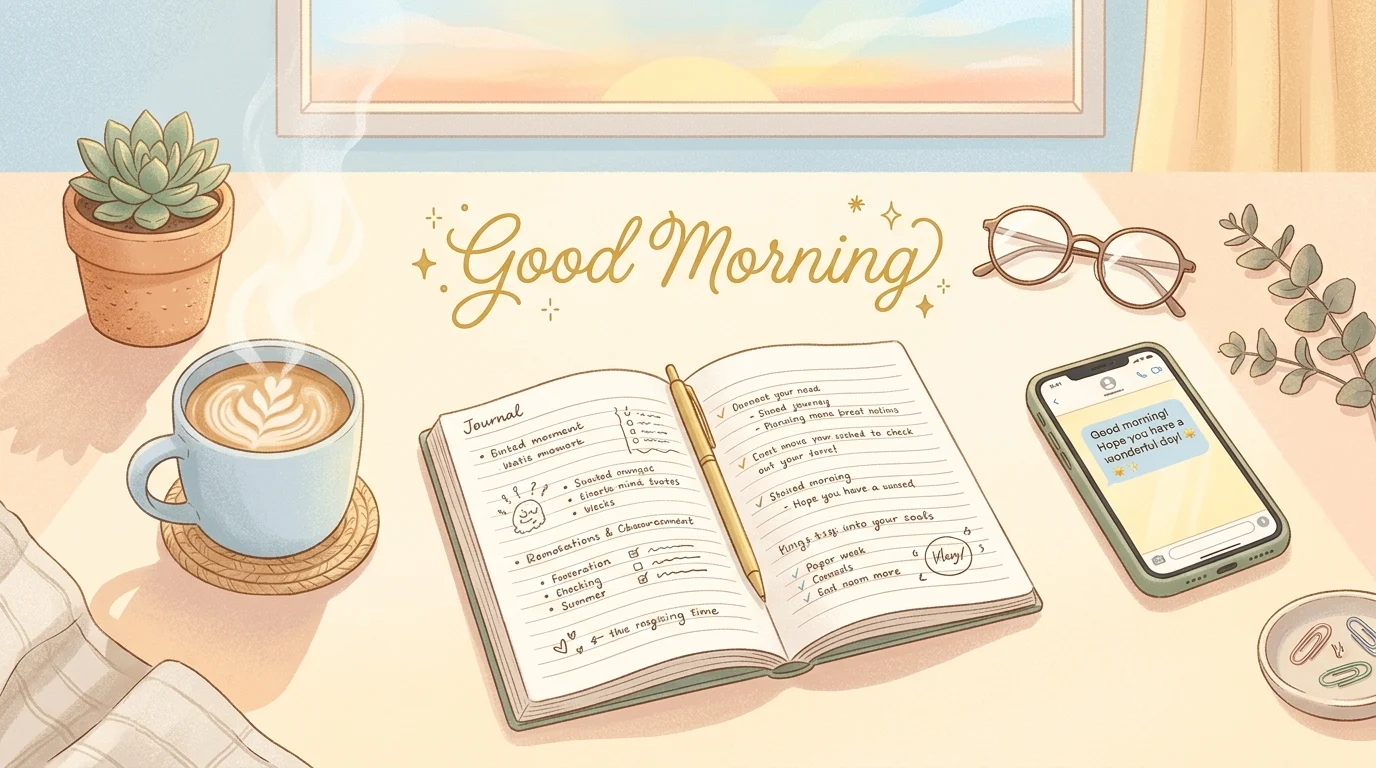
Quick Answer: Instead of saying “good morning,” you can use phrases like “rise and shine,” “top of the morning to you,” “hope you had a restful night,” “wishing you a bright start to your day,” or “morning sunshine” depending on whether you are greeting a colleague, a friend, or a loved one.
It is early morning, and you want to send a quick message to your team, your partner, or a friend. The phrase “good morning” sits in your draft, but it feels overused. You want something fresher that still feels warm and appropriate.
The phrase means wishing someone a pleasant start to their day. People use it in texts, emails, chats, and social media posts to spread positive energy at the beginning of the day. It is friendly, safe, and widely understood.
Learning alternatives to “good morning” helps you avoid repetition and match your tone to the recipient. A message to your boss needs different language than one to your best friend. This is everyday communication skill, not just vocabulary building.
With years of experience writing workplace messages, personal notes, and social media content, I have seen how small phrase choices change how people respond. The right words express warmth, energy, or care. You can choose from formal alternatives and informal expressions in English.
Quick Categories
Formal Alternatives to “Good Morning”
- Wishing you a pleasant morning
- I hope your day starts well
- Have a wonderful start to your day
Pro Tip: Use these when emailing senior colleagues, clients, or anyone outside your immediate circle.
Casual Alternatives
- Morning
- Rise and shine
- Morning, sunshine
Pro Tip: Save these for close friends, family, or people you message regularly.
Professional Alternatives
- Good morning, team
- Hope you are off to a great start
- Wishing you a productive morning
Pro Tip: These work for team emails, project updates, or manager messages.
Informal Expressions
- Mornin’
- Top of the morning to you
- Wakey wakey
Pro Tip: Use informal expressions only in relaxed chats, not in formal business writing.
Common Mistakes
- Incorrect: “Good morning’s!”
Correct: “Good morning!” - Incorrect: “Good morning day!”
Correct: “Good morning!” - Incorrect: Saying “good morning” in the evening.
Correct: Say “good evening” or “good afternoon” instead. - Incorrect: Using “good morning” in a serious email about bad news.
Correct: Keep the tone neutral and save greetings for positive contexts. - Incorrect: “Good morning to your day!”
Correct: “Good morning! Have a great day.”
What Does “Good Morning” Mean?
It is a cheerful greeting wishing someone a pleasant start to their day. Grammatically, “good” functions as an adjective describing the morning, and the phrase works as a standalone greeting.
Example: “Good morning! How did you sleep?”
When to Use “Good Morning”
- In morning team messages
- In casual emails before starting work
- In social media posts in the morning
- In texts to friends and family
- In face-to-face greetings
Spoken vs Written: Common in both, especially in spoken English and written chats.
Formal vs Informal: Generally neutral. Can feel too casual in strict corporate settings or too stiff in intimate messages.
Is It Polite and Professional to Say “Good Morning”?
Yes, it is polite. It is also professional in most workplaces. The phrase is friendly, positive, and rarely inappropriate. However, in very formal or conservative environments, it can sound overly casual, and in intimate settings, it can feel distant.
Politeness means showing warmth and consideration. Professionalism means matching your workplace culture. “Good morning” sits in the friendly middle.
Business style example: “Good morning, team. Here is today’s agenda. Let’s have a productive day.”
Verdict: Polite? Yes. Professional? Yes, in most workplaces. Depends for very formal external emails or intimate messages.
Pros and Cons of Using “Good Morning”
Pros:
- Universally understood and friendly
- Sets a positive tone for the day
- Short and easy to include in messages
- Works across many relationships
Cons:
- Overused and can feel generic
- Can seem unprofessional in strict environments
- May feel distant in close relationships
- Lacks personal touch without added details
Other Ways to Say “Good Morning” (With Examples)
These alternatives will help you sound more fluent, confident, and natural in different situations. Use them according to tone, context, and audience.
Formal Alternatives
- Phrase: Wishing you a pleasant morning
Meaning: Polite wish for a good start to the day.
Explanation: Formal and respectful; suits professional emails.
Example Sentence: “Wishing you a pleasant morning and a productive day ahead.”
Best Use: Client emails
Worst Use: Casual texts
Tone: Formal, polite, respectful
Context Variability:- Casual: N/A
- Professional: “Wishing you a pleasant morning.”
- Spoken: N/A
- Phrase: I hope your day starts well
Meaning: Wish someone a good beginning.
Explanation: Formal-leaning; focuses on the start.
Example Sentence: “I hope your day starts well and continues to improve.”
Best Use: Professional emails
Worst Use: Quick chats
Tone: Formal, calm, warm
Context Variability:- Casual: N/A
- Professional: “I hope your day starts well.”
- Spoken: “I hope your day starts well.”
- Phrase: Have a wonderful start to your day
Meaning: Wish someone a great morning.
Explanation: Appreciative and formal.
Example Sentence: “Have a wonderful start to your day; you have earned it.”
Best Use: Team emails
Worst Use: Casual messages
Tone: Appreciative, formal, warm
Context Variability:- Casual: N/A
- Professional: “Have a wonderful start to your day.”
- Spoken: “Have a wonderful start to your day.”
- Phrase: I hope you had a restful night
Meaning: Wish someone well-rested morning.
Explanation: Polite and gentle.
Example Sentence: “I hope you had a restful night and are ready for the day.”
Best Use: Professional relationships
Worst Use: Peer humor
Tone: Polite, gentle, warm
Context Variability:- Casual: “I hope you had a restful night.”
- Professional: “I hope you had a restful night.”
- Spoken: “I hope you had a restful night.”
Professional Alternatives
- Phrase: Good morning, team
Meaning: Simple professional greeting for a group.
Explanation: Neutral and workplace-friendly.
Example Sentence: “Good morning, team. Let’s make today count.”
Best Use: Team emails
Worst Use: Social posts
Tone: Professional, friendly, neutral
Context Variability:- Casual: “Good morning, team.”
- Professional: “Good morning, team.”
- Spoken: “Good morning, team.”
- Phrase: Hope you are off to a great start
Meaning: Acknowledge the beginning of the day.
Explanation: Positive and professional.
Example Sentence: “Hope you are off to a great start this morning.”
Best Use: Team updates
Worst Use: External emails
Tone: Professional, positive, team-focused
Context Variability:- Casual: “Hope you are off to a great start.”
- Professional: “Hope you are off to a great start.”
- Spoken: “Hope you are off to a great start.”
- Phrase: Wishing you a productive morning
Meaning: Wish someone an efficient start.
Explanation: Professional and goal-oriented.
Example Sentence: “Wishing you a productive morning and a smooth day ahead.”
Best Use: Manager emails
Worst Use: Casual chats
Tone: Professional, motivating, neutral
Context Variability:- Casual: N/A
- Professional: “Wishing you a productive morning.”
- Spoken: N/A
- Phrase: Starting the day strong
Meaning: Encourage a good beginning.
Explanation: Motivational and upbeat.
Example Sentence: “Starting the day strong; let’s keep the momentum going.”
Best Use: Team motivation
Worst Use: Formal reports
Tone: Motivating, upbeat, professional
Context Variability:- Casual: “Starting the day strong.”
- Professional: “Starting the day strong.”
- Spoken: “Starting the day strong.”
Casual Alternatives
- Phrase: Morning
Meaning: Short casual greeting.
Explanation: Classic casual shortcut.
Example Sentence: “Morning! How are you feeling today?”
Best Use: Friends, peers
Worst Use: Formal emails
Tone: Casual, friendly, brief
Context Variability:- Casual: “Morning.”
- Professional: N/A
- Spoken: “Morning.”
- Phrase: Rise and shine
Meaning: Cheerful way to wake someone up.
Explanation: Relatable and casual.
Example Sentence: “Rise and shine, it’s a beautiful day.”
Best Use: Family chats
Worst Use: Client emails
Tone: Casual, cheerful, warm
Context Variability:- Casual: “Rise and shine.”
- Professional: N/A
- Spoken: “Rise and shine.”
- Phrase: Top of the morning to you
Meaning: Traditional Irish greeting.
Explanation: Fun and friendly.
Example Sentence: “Top of the morning to you; hope today treats you well.”
Best Use: Social messages
Worst Use: Formal reports
Tone: Casual, friendly, playful
Context Variability:- Casual: “Top of the morning to you.”
- Professional: N/A
- Spoken: “Top of the morning to you.”
- Phrase: Morning, sunshine
Meaning: Affectionate way to greet someone.
Explanation: Casual and warm.
Example Sentence: “Morning, sunshine; ready to take on the day?”
Best Use: Loved ones
Worst Use: Bosses
Tone: Casual, affectionate, warm
Context Variability:- Casual: “Morning, sunshine.”
- Professional: N/A
- Spoken: “Morning, sunshine.”
Friendly and Warm Alternatives
- Phrase: Hope you slept well
Meaning: Wish someone a good night’s rest.
Explanation: Warm and empathetic.
Example Sentence: “Hope you slept well and are ready for a great day.”
Best Use: Colleagues
Worst Use: Formal emails
Tone: Warm, friendly, empathetic
Context Variability:- Casual: “Hope you slept well.”
- Professional: “Hope you slept well.”
- Spoken: “Hope you slept well.”
- Phrase: Wishing you a bright morning
Meaning: Hope the day starts positively.
Explanation: Supportive and calm.
Example Sentence: “Wishing you a bright morning and an even better afternoon.”
Best Use: Professional chats
Worst Use: Humor posts
Tone: Warm, calm, supportive
Context Variability:- Casual: “Wishing you a bright morning.”
- Professional: “Wishing you a bright morning.”
- Spoken: “Wishing you a bright morning.”
- Phrase: Hope your morning is off to a good start
Meaning: Wish for a pleasant beginning.
Explanation: Caring and personal.
Example Sentence: “Hope your morning is off to a good start.”
Best Use: Close colleagues
Worst Use: Client emails
Tone: Caring, warm, personal
Context Variability:- Casual: “Hope your morning is off to a good start.”
- Professional: “Hope your morning is off to a good start.”
- Spoken: “Hope your morning is off to a good start.”
- Phrase: Enjoy your morning to the fullest
Meaning: Encourage full enjoyment of the morning.
Explanation: Positive and friendly.
Example Sentence: “Enjoy your morning to the fullest.”
Best Use: Friends, peers
Worst Use: Formal notices
Tone: Warm, positive, friendly
Context Variability:- Casual: “Enjoy your morning to the fullest.”
- Professional: N/A
- Spoken: “Enjoy your morning to the fullest.”
Informal and Humorous Alternatives
- Phrase: Mornin’
Meaning: Playful shortened version.
Explanation: Fun and relaxed.
Example Sentence: “Mornin’, how’s it going?”
Best Use: Social media
Worst Use: Business emails
Tone: Playful, casual, relaxed
Context Variability:- Casual: “Mornin’.”
- Professional: N/A
- Spoken: “Mornin’.”
- Phrase: Wakey wakey
Meaning: Humorous way to wake someone.
Explanation: Light and funny.
Example Sentence: “Wakey wakey, eggs and bakey.”
Best Use: Funny messages
Worst Use: Formal reports
Tone: Humorous, casual, light
Context Variability:- Casual: “Wakey wakey.”
- Professional: N/A
- Spoken: “Wakey wakey.”
- Phrase: The early bird gets the worm
Meaning: Encourage an early start.
Explanation: Trendy and motivational.
Example Sentence: “The early bird gets the worm; let’s go.”
Best Use: Social posts
Worst Use: Corporate emails
Tone: Motivational, casual, playful
Context Variability:- Casual: “The early bird gets the worm.”
- Professional: N/A
- Spoken: “The early bird gets the worm.”
- Phrase: Coffee’s ready, let’s go
Meaning: Signal the start of the day.
Explanation: Playful and relatable.
Example Sentence: “Coffee’s ready, let’s go; big day ahead.”
Best Use: Friends
Worst Use: Clients
Tone: Playful, upbeat, casual
Context Variability:- Casual: “Coffee’s ready, let’s go.”
- Professional: N/A
- Spoken: “Coffee’s ready, let’s go.”
- Phrase: Rise and grind
Meaning: Funny way to encourage productivity.
Explanation: Humorous and motivational.
Example Sentence: “Rise and grind; today is your day.”
Best Use: Funny notes
Worst Use: Formal contexts
Tone: Humorous, motivational, warm
Context Variability:- Casual: “Rise and grind.”
- Professional: N/A
- Spoken: “Rise and grind.”
Celebratory Alternatives
- Phrase: Celebrate the start of a new day
Meaning: Encourage a positive beginning.
Explanation: Upbeat and social.
Example Sentence: “Celebrate the start of a new day; make it count.”
Best Use: Friends, peers
Worst Use: Formal emails
Tone: Upbeat, celebratory, warm
Context Variability:- Casual: “Celebrate the start of a new day.”
- Professional: N/A
- Spoken: “Celebrate the start of a new day.”
- Phrase: Here’s to a great morning
Meaning: Toast to the start of the day.
Explanation: Social and celebratory.
Example Sentence: “Here’s to a great morning and a fantastic day.”
Best Use: Social settings
Worst Use: Office emails
Tone: Celebratory, social, casual
Context Variability:- Casual: “Here’s to a great morning.”
- Professional: N/A
- Spoken: “Here’s to a great morning.”
- Phrase: Enjoy the morning magic
Meaning: Savor the mood of the morning.
Explanation: Warm and positive.
Example Sentence: “Enjoy the morning magic; the day is full of possibilities.”
Best Use: Friends, team
Worst Use: Client emails
Tone: Warm, positive, friendly
Context Variability:- Casual: “Enjoy the morning magic.”
- Professional: N/A
- Spoken: “Enjoy the morning magic.”
- Phrase: Happy start of the day
Meaning: Greet the beginning of the day.
Explanation: Neutral and inclusive.
Example Sentence: “Happy start of the day to everyone.”
Best Use: Team messages
Worst Use: Social posts
Tone: Neutral, friendly, professional
Context Variability:- Casual: “Happy start of the day.”
- Professional: “Happy start of the day.”
- Spoken: “Happy start of the day.”
Social Media Style Alternatives
- Phrase: Morning mode activated
Meaning: Signal the start of the day.
Explanation: Fun and trendy.
Example Sentence: “Morning mode activated.”
Best Use: Social media
Worst Use: Formal emails
Tone: Trendy, fun, casual
Context Variability:- Casual: “Morning mode activated.”
- Professional: N/A
- Spoken: “Morning mode activated.”
- Phrase: Day loading
Meaning: Playful way to say the day is starting.
Explanation: Tech-inspired humor.
Example Sentence: “Day loading, please wait.”
Best Use: Social posts
Worst Use: Professional emails
Tone: Playful, trendy, casual
Context Variability:- Casual: “Day loading.”
- Professional: N/A
- Spoken: “Day loading.”
- Phrase: Morning mood on
Meaning: Announce a positive mood.
Explanation: Short and trendy.
Example Sentence: “Morning mood on; let’s do this.”
Best Use: Social posts
Worst Use: Client emails
Tone: Trendy, casual, playful
Context Variability:- Casual: “Morning mood on.”
- Professional: N/A
- Spoken: “Morning mood on.”
- Phrase: Starting the day with good energy
Meaning: Begin the day positively.
Explanation: Upbeat and motivational.
Example Sentence: “Starting the day with good energy.”
Best Use: Team posts
Worst Use: Formal reports
Tone: Positive, motivational, warm
Context Variability:- Casual: “Starting the day with good energy.”
- Professional: “Starting the day with good energy.”
- Spoken: “Starting the day with good energy.”
- Phrase: Here’s to a bright day
Meaning: Toast to the day ahead.
Explanation: Warm and social.
Example Sentence: “Here’s to a bright day ahead.”
Best Use: Social messages
Worst Use: Formal emails
Tone: Warm, social, friendly
Context Variability:- Casual: “Here’s to a bright day.”
- Professional: N/A
- Spoken: “Here’s to a bright day.”
Pull Quotes
“Good morning” is friendly and safe, but safe can also mean forgettable. A fresh phrase shows you put thought into your message.
Tone matters more than vocabulary. “Wakey wakey” to a client sounds careless. “Wishing you a pleasant morning” to a close friend sounds stiff.
Professional communication is not about big words. It is about choosing the right words for the right person at the right moment.
Humor works in the morning only when you know your audience. When in doubt, choose warmth over wit.
Mini Quiz
1. You are emailing a client in the morning. Which is most appropriate?
a) “Wakey wakey”
b) “Wishing you a pleasant morning”
c) “Morning mode activated”
2. Your close friend is starting a new job today. What should you say?
a) “Rise and grind”
b) “I hope you had a restful night”
c) “Day loading”
3. Which phrase is best for a team chat?
a) “Good morning, team”
b) “Top of the morning to you”
c) “Here’s to a great morning”
4. You are posting on social media. Which fits best?
a) “Wishing you a pleasant morning”
b) “Morning mode activated”
c) “Wishing you a productive morning”
Answers:
- (b) – Formal and respectful for client communication.
- (a) – Motivating and friendly for someone starting a new job.
- (a) – Professional and inclusive for a relaxed team chat.
- (b) – Trendy and fun for social media.
Comparison Table
| Phrase | Tone | Best Use |
|---|---|---|
| Wishing you a pleasant morning | Formal, polite | Client emails |
| I hope your day starts well | Formal, calm | Professional emails |
| Good morning, team | Professional, friendly | Team emails |
| Hope you are off to a great start | Professional, positive | Team updates |
| Morning | Casual, brief | Friends, peers |
| Rise and shine | Casual, cheerful | Family chats |
| Top of the morning to you | Casual, friendly | Social messages |
| Hope you slept well | Warm, empathetic | Colleagues |
| Mornin’ | Playful, relaxed | Social media |
| Morning mode activated | Trendy, fun | Social posts |
FAQs
What can I say instead of “good morning”?
You can say “rise and shine,” “top of the morning to you,” “hope you slept well,” “wishing you a bright morning,” or “morning, sunshine” depending on context.
Is “good morning” professional?
Yes, it is professional in most workplaces. However, in very formal or conservative environments, “wishing you a pleasant morning” is a safer choice.
How do you say good morning professionally in an email?
Use “wishing you a pleasant morning,” “I hope your day starts well,” or “have a wonderful start to your day.” These sound warm without being too casual.
What does “rise and shine” mean?
“Rise and shine” is a cheerful, casual way to wake someone up or greet them in the morning. It is best used with family or close friends.
Is it okay to say “good morning” to my boss?
Yes, it is generally fine in modern workplaces. For a more formal tone, try “wishing you a pleasant morning” or “hope you are off to a great start.”
Conclusion
Learning alternatives to “good morning” helps you sound fresh, natural, and thoughtful in English. You can be formal, casual, funny, or warm depending on who reads your message. The right phrase makes your morning greeting stand out.
Practice choosing phrases based on tone and context. Try one new expression each morning and notice how people respond. Small changes build fluency over time.
Which phrase will you use tomorrow morning? Share this article with a colleague who wants to write better messages.
See Also
- Other Ways to Say “For Example”
- Other Ways to Say “Get Well Soon”
- Other Ways to Say “Happy Friday”
- Professional English Greetings for Workplace Emails

Alexander Whitmore is a passionate writer and editor who specializes in English expressions, vocabulary, and effective communication. He helps readers discover clearer, more natural, and professional ways to express their thoughts.